
🔑 Key Takeaway:Standard PSU bank education loans in India generally exclude distance and part-time courses, which means most students financing an online or distance degree actually use NBFC or fintech "no-cost EMI" partners (such as Propelld, Jodo,
🔑 Key Takeaway:
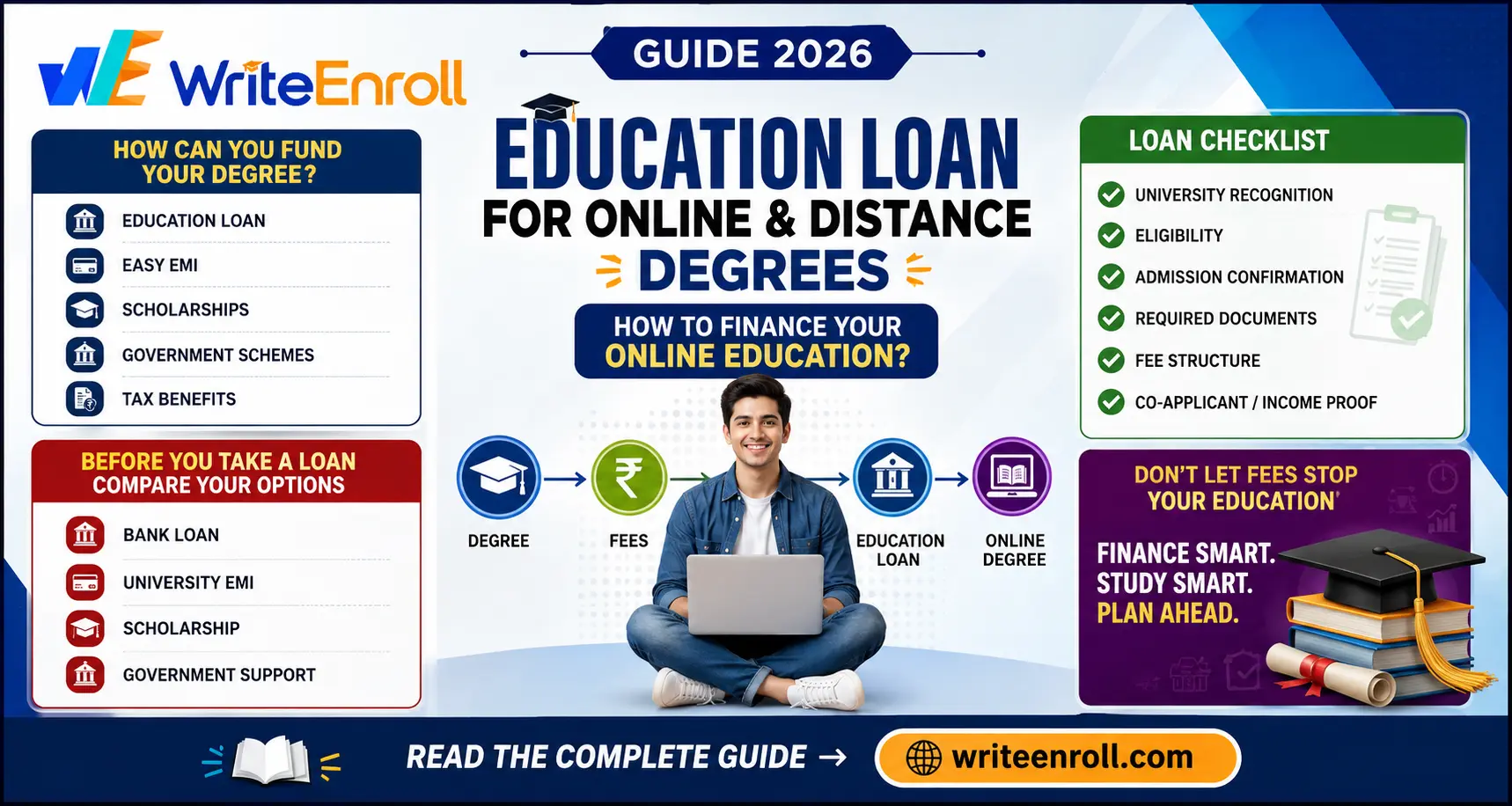
Standard PSU bank education loans in India generally exclude distance and part-time courses, which means most students financing an online or distance degree actually use NBFC or fintech "no-cost EMI" partners (such as Propelld, Jodo, Eduvanz, or Early Salary) offered directly through the university, rather than a traditional bank education loan. Understanding this distinction matters for interest rates, collateral requirements, and tax benefit eligibility under Section 80E.
Many students assume that "education loan" means the same product regardless of whether their degree is regular, online, or distance mode. In practice, this is one of the more consequential misunderstandings in the online education space, and getting it right before enrolling can save meaningful money over the life of the loan.
Standard PSU (Public Sector Undertaking) bank education loans in India generally exclude distance-learning and part-time courses from eligibility. This means the traditional path of walking into SBI, Bank of Baroda, or a similar public sector bank for a collateral-backed education loan at a relatively low interest rate is often not available for online or distance-mode degrees, even when the university itself is fully UGC-DEB approved and legitimate.
In practice, most students financing online or distance degrees use Non-Banking Financial Companies (NBFCs) or fintech lending partners directly integrated with the university's admission process — names like Propelld, Jodo, Eduvanz, Liquiloans, and Early Salary appear repeatedly across university fee pages as "No-Cost EMI" partners. These are genuinely different financial products from a traditional bank education loan: typically unsecured (no collateral), approved faster, but sometimes carrying different interest rate structures and tax treatment than a bank loan.
Interest paid on a genuine education loan from a bank or approved financial institution is eligible for a tax deduction under Section 80E of the Income Tax Act. Whether a specific NBFC's "no-cost EMI" product for an online degree qualifies under this section is not automatic — it depends on whether the specific lender is a notified financial institution under the relevant rules. Before assuming you'll receive this tax benefit, verify directly with your lender whether their specific product qualifies, rather than assuming any education-related payment plan automatically does.
Regardless of whether you approach a bank or an NBFC, most lenders require: confirmed admission to a recognized program before final loan disbursement, a co-applicant (commonly a parent or spouse) with income proof, and reasonable credit history for the co-applicant (a CIBIL score above 650-700 significantly improves approval odds). Age requirements are typically broad (commonly 18-35, sometimes higher for specific working-professional programs).
Q: Can I get a standard bank education loan for an online MBA?
A: Often not through standard PSU bank schemes, since these frequently exclude distance/part-time courses — though this varies by bank and program, so always check directly rather than assuming exclusion.
Q: What is "No-Cost EMI" and is it really free?
A: It typically means the university or an NBFC partner absorbs the interest cost that would otherwise apply, though some plans include processing fees — always request the total repayment amount in writing to verify the real cost.
Q: Do NBFC education loans qualify for Section 80E tax deduction?
A: This depends on whether the specific lender is a notified financial institution under the relevant tax rules — verify this directly with your lender rather than assuming.
Q: Is collateral required for online degree financing?
A: Most NBFC/fintech options for online degrees are unsecured (no collateral), unlike larger traditional bank education loans which may require collateral above a certain loan amount.
Q: Where can I compare loan options across multiple lenders?
A: The government's Vidya Lakshmi Portal aggregates education loan scheme information across multiple banks and can be a useful starting comparison point.
Before assuming your online or distance degree qualifies for the same education loan product as a regular degree, confirm directly with both a standard bank and the university's specific NBFC/EMI partners — the financing landscape for online education in India runs through a genuinely different set of lenders than most students initially expect.
Suggested Internal Links:
/admission/ | /courses/